
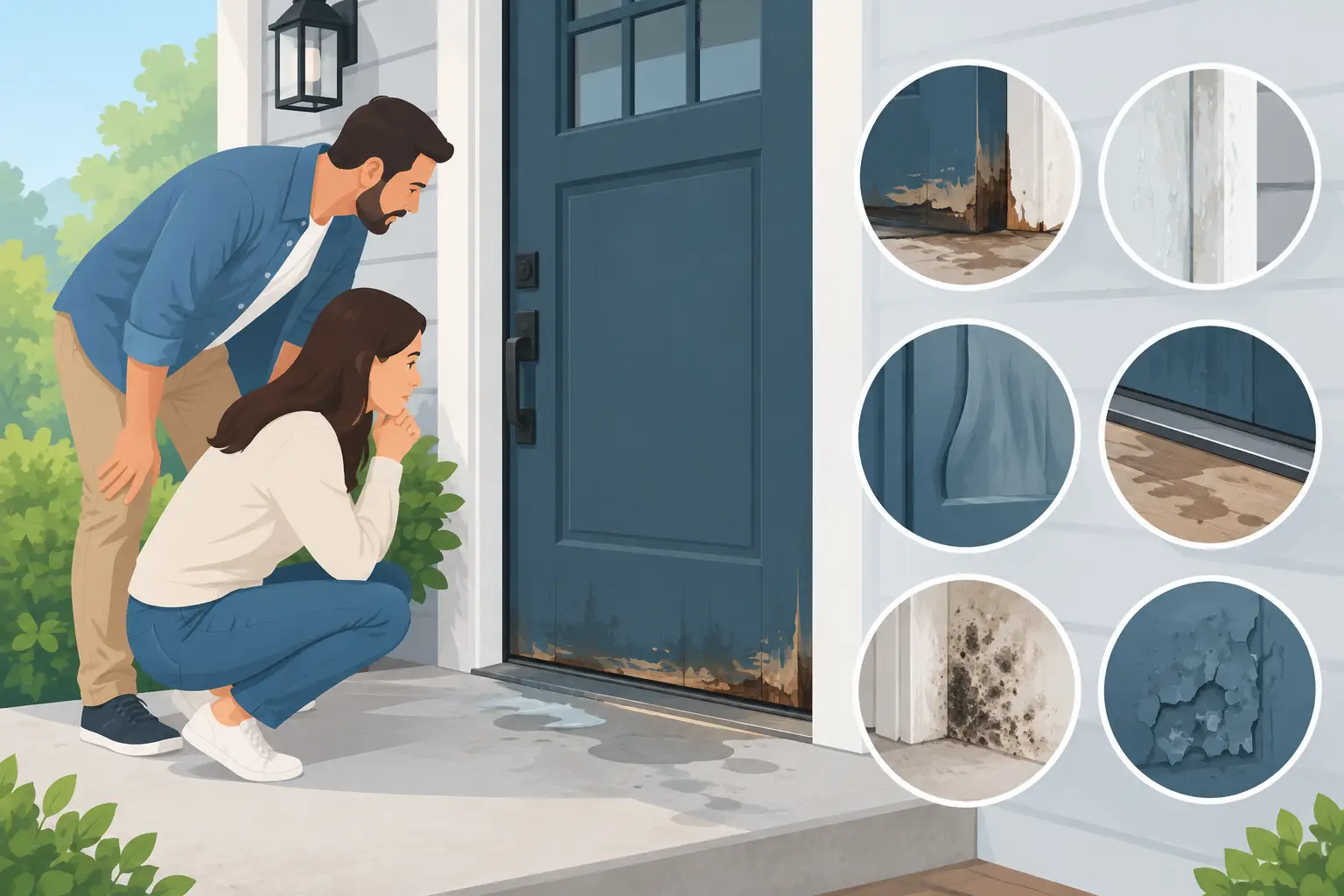
A door can look perfectly serviceable from across the driveway while allowing rain to work its way into the wall, flooring, and framing around it. In South Florida, exterior door water damage is rarely caused by an ordinary drizzle alone. It often starts when wind-driven rain finds a weak point during a tropical storm, heavy summer downpour, or hurricane event.
The right response is not always a full door replacement. Sometimes a failed sweep, damaged threshold, or worn seal is the issue. But when moisture has reached the frame, subfloor, or surrounding wall, a cosmetic fix can leave the real problem growing behind the trim. Knowing what to look for helps protect your home before the next storm puts that opening to the test.
Why South Florida Doors Face a Higher Water Risk
Exterior doors are among the most exposed parts of a home. They sit at ground level, where pooling water, roof runoff, and landscaping drainage can concentrate. They also have moving parts and multiple joints: the slab, frame, hinges, threshold, weatherstripping, lockset, and glass panels if the door includes them.
South Florida adds another layer of pressure. Rain does not always fall straight down. Strong winds can force water sideways and upward against the door perimeter, testing seals that may appear adequate in calm weather. Constant heat, humidity, and UV exposure can also dry out caulk, warp certain materials, and shorten the useful life of weatherstripping.
For homes near the coast, salt-laden air can accelerate corrosion at thresholds, fasteners, and hardware. A door system that is not properly installed, flashed, sealed, and maintained may slowly become vulnerable even if the door itself is made from a quality material.
7 Signs of Exterior Door Water Damage to Address
1. Staining or soft spots around the interior trim
Brown rings, dark streaks, bubbling paint, or swollen baseboards near a door opening are clear warning signs. They may appear after a storm and then seem to dry out, but that does not mean the source is gone. Moisture may be entering behind the exterior trim or through the threshold and collecting in concealed materials.
Press gently along the lower portions of the jamb and adjacent trim. Soft, spongy wood or crumbling material deserves prompt professional attention.
2. A swollen, warped, or sticking door
Wood doors can swell after repeated moisture exposure, while other door types may shift if the frame or surrounding structure absorbs water. A door that suddenly rubs the jamb, needs to be forced shut, or no longer latches consistently can be reacting to more than normal settling.
Hinge adjustment may help in limited cases, but it will not solve a wet or deteriorating frame. The cause should be identified before hardware is adjusted or the door is replaced.
3. Water at the threshold after heavy rain
A small puddle inside the door is an obvious concern, but subtle moisture matters too. Look for dampness beneath entry rugs, along the flooring edge, or at the corners where the threshold meets the jamb. Water can also enter beneath a threshold and travel under flooring before it becomes visible.
This problem may come from a worn door sweep or weatherstripping. It can also point to poor sill flashing, improper threshold slope, or exterior drainage that directs water toward the opening.
4. Cracked caulk or separated exterior trim
Caulk is not a permanent repair material. Under intense sun and weather exposure, it can crack, shrink, or pull away from the door frame and wall finish. Gaps around brickmold, trim, or stucco transitions give wind-driven rain an easy path behind the exterior surface.
Fresh caulk can be appropriate when the underlying installation is sound. If trim is loose, stained, or rotted, sealing over it can trap moisture rather than resolve the intrusion.
5. Rusted hardware or corrosion at the threshold
Rust on hinges, screws, strike plates, or the bottom threshold may signal repeated moisture exposure. Some surface corrosion is common in coastal conditions, but widespread rust near one opening should not be dismissed as a hardware-only problem.
Check whether the door is draining as intended and whether water sits against the threshold after rain. A corroded threshold can eventually lose its ability to seal and support the door properly.
6. Musty odors near the entry
A persistent damp or musty odor around a front, side, patio, or utility door can indicate moisture hidden inside the wall or beneath the floor. Mold growth does not always show on the painted surface first. In humid conditions, even a small recurring leak can create the conditions mold needs.
Odor alone cannot confirm where the water is coming from. It does, however, justify a closer inspection, especially if it follows storms or appears alongside staining and peeling paint.
7. Drafts, daylight, or loose weatherstripping
If you can see daylight around a closed door, feel a draft, or notice weatherstripping that is flattened, torn, or missing, the opening is not fully protected. Air gaps are not always water paths, but during a wind-driven rain event, they often become one.
Replacing weatherstripping is a sensible maintenance step when the door and frame are otherwise sound. If gaps are uneven from top to bottom, the frame may be out of square or the door may have shifted, which calls for a more complete evaluation.
Find the Source Before Planning the Repair
The visible damage is not always the entry point. Water appearing at the bottom of a door could be coming through the threshold, but it could also be running down from a wall penetration, failed flashing above the door, a nearby window, or a roof drainage issue.
Start by noting when the problem occurs. Does it happen only during wind-driven rain? After long periods of rainfall? When water is sprayed near one side of the opening? These details help isolate the likely path. Avoid repeatedly soaking the area with a hose, especially if there may already be concealed damage.
A professional assessment should consider the complete opening: the door slab, frame condition, weatherstripping, threshold, exterior sealant, flashing, wall finish, and surrounding drainage. For a storm-exposed home, the goal is not simply to stop a drip. It is to restore a properly performing exterior barrier.
Repair or Replace? The Decision Depends on the Damage
Minor issues can often be corrected without replacing the entire door. A door sweep, worn weatherstripping, isolated caulk failure, or small hardware issue may be addressed as part of routine maintenance. Prompt attention matters because these small components protect much more expensive materials behind them.
Replacement becomes more likely when the frame is rotted, the threshold has failed, the door no longer fits the opening correctly, or recurring leaks have damaged surrounding finishes. It may also make sense when an older door does not provide the hurricane-impact protection, security, and energy performance a South Florida home needs.
For homes in hurricane-prone areas, a premium impact-rated door system is more than a curb-appeal upgrade. When selected for the opening and professionally installed, it can provide a stronger, code-conscious layer of protection against wind pressure and wind-borne debris. The installation matters as much as the product. A high-quality door cannot perform as intended if the frame, fasteners, flashing, and seals are compromised.
Steps Homeowners Can Take Now
After rain, inspect the inside and outside of frequently used doors before damage spreads. Keep exterior drainage moving away from the threshold, and do not allow mulch, soil, pavers, or decorative materials to trap water against the door frame. Clean debris from door tracks and weep areas where applicable.
Do not paint over stains, add excessive caulk, or cover soft trim as a first response. Those actions may improve appearance temporarily while moisture remains active behind the surface. If you see swelling, rot, repeated leaks, or signs of water inside the wall, document the issue with photos and arrange a professional evaluation.
Florida Roof & Impact helps South Florida homeowners assess vulnerable exterior openings and plan high-quality door upgrades designed for demanding weather conditions. A clear inspection can distinguish a manageable maintenance need from a larger water-intrusion issue before the next severe rain event raises the stakes.
Your exterior doors should close with confidence, shed water effectively, and support the protection of the entire home. Addressing early warning signs now gives you more control over the repair, the investment, and the condition of your home when storm season returns.