
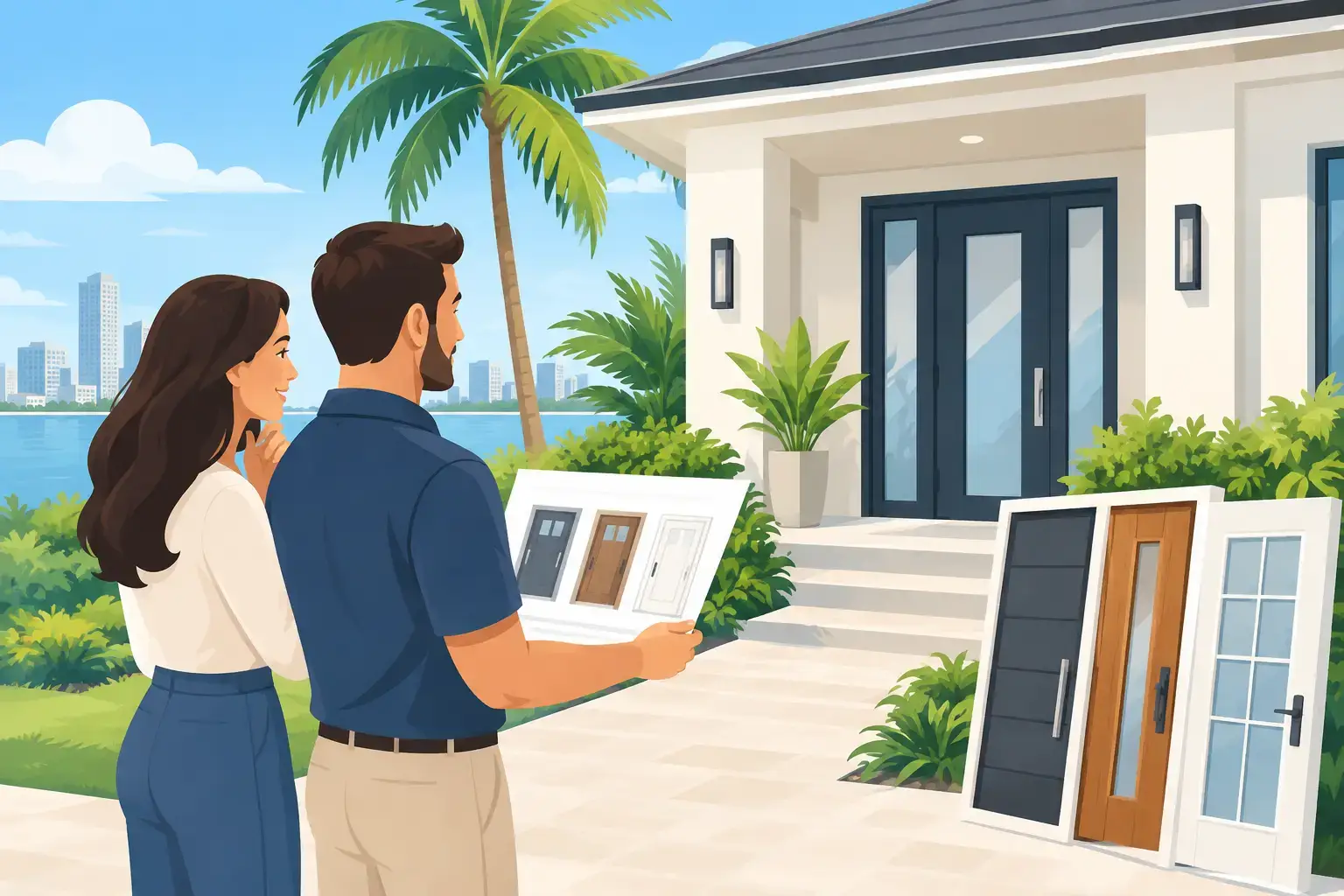
A door can look acceptable from the driveway while allowing rain, heat, and wind pressure to challenge the opening around it. In South Florida, a smart door replacement planning guide starts with more than color or hardware. It starts with how the door will protect your home when hurricane season, driving rain, high humidity, and daily sun exposure put every exterior opening to work.
A new entry, patio, or sliding glass door should improve the way your home performs and the way it feels to come home. The right plan helps you make confident decisions about impact protection, design, installation, permits, and budget before materials are ordered.
Your South Florida Door Replacement Planning Guide
The first decision is whether you are replacing a door for appearance, performance, storm protection, or all three. The answer affects the product, scope of work, and investment.
Common warning signs include visible rot around the frame, corrosion, cloudy glass, sticking panels, failed weatherstripping, water stains near the opening, or doors that no longer lock smoothly. A drafty door can also increase strain on your air conditioning system. After a storm, even a door without obvious glass breakage may need professional evaluation if the frame shifted, hardware was damaged, or water entered around the threshold.
If your home still has older non-impact doors or glass doors protected only by shutters, replacement is an opportunity to strengthen a vulnerable opening. Doors are large, operable sections of the building envelope. Their performance depends on the entire assembly, not just the slab or glass panel in the middle.
Identify the full scope before choosing a door
A door replacement can be straightforward, but it is not always a simple swap. The condition of the existing frame, wall opening, sill, stucco, flooring transition, and surrounding trim all matter. Water damage or wood rot may require repairs before the new unit can be properly installed.
For patio and French doors, consider how the new configuration will change furniture placement, traffic flow, and outdoor access. A wider sliding glass door can bring in more light and create a stronger connection to the patio, but it may also require structural modifications. An inswing versus outswing entry door changes interior clearance and can affect how the door performs in heavy wind and rain.
During an estimate, ask for a clear explanation of what is included around the opening. That should cover removal, disposal, framing repairs if needed, flashing and waterproofing details, exterior finish restoration, interior trim, and final adjustments. A lower initial price can become less attractive if it excludes essential preparation or finish work.
Choose Protection That Fits the Opening
For many South Florida homes, hurricane-impact doors are the practical choice. Impact-rated systems are engineered and tested to resist wind pressure and wind-borne debris. They can help protect the opening during severe weather without the need to deploy separate shutters for that door.
The right rating is not one-size-fits-all. Requirements can vary based on your municipality, wind zone, home location, opening size, and exposure conditions. A coastal property or a home with open exposure may need a different solution than a sheltered inland residence. Product approvals, glass type, frame construction, anchoring, and installation method must work together to meet applicable code requirements.
Do not assume that tempered glass is the same as impact glass. Tempered glass breaks into small pieces when damaged, while impact glass typically uses laminated layers designed to hold together after impact. The distinction matters when debris strikes the glass and when a home must remain enclosed against wind and water pressure.
Impact protection also brings everyday benefits. Laminated glass can reduce outside noise, improve security, and filter a portion of UV exposure that contributes to fading inside the home. Those advantages do not replace the need for proper installation, but they can make the investment valuable long after storm season.
Compare door styles with real-life use in mind
Your preferred style should serve the home, not just the showroom. A fiberglass entry door can offer a polished appearance with strong resistance to moisture and heat. Steel doors can provide security and value, although coastal conditions make finish quality and maintenance especially important. Wood creates a traditional look but requires more consistent care in South Florida's humidity and sun.
For rear and patio openings, sliding glass doors are a popular way to preserve space and maximize views. French doors offer a more classic appearance and a wider open passage when both panels are active. Folding or multi-panel systems can create a dramatic indoor-outdoor transition, but their greater size and complexity demand careful engineering, water management, and budget planning.
Look closely at the threshold as well. A low-profile threshold may improve accessibility, while a raised system can offer stronger water resistance in certain applications. This is a trade-off that should be considered early, especially where heavy rain can collect near the exterior landing.
Plan for Water Management, Not Just Wind Resistance
South Florida doors face repeated rain exposure, not only rare storm events. A quality installation must direct water away from the opening and create a reliable seal between the new frame and the home.
That process may involve sill pans, flashing, approved sealants, properly placed fasteners, drainage paths, and careful integration with stucco or exterior cladding. The goal is not to trap water behind a clean-looking bead of caulk. It is to manage water so it cannot reach vulnerable framing, insulation, or interior finishes.
Pay attention to conditions outside the door. Negative grading, cracked concrete, clogged drains, and patios that slope toward the house can create problems no door alone can solve. If the threshold is near a pool deck, balcony, or low-lying patio, raise this concern during planning. Resolving drainage issues before installation is often easier than correcting them after finishes are complete.
Budget for the Entire Project
Door pricing varies significantly based on size, impact rating, glass selection, frame material, hardware, configuration, finish, and required structural work. The best comparison is not simply between two product prices. Compare complete proposals that describe the same level of protection and installation scope.
A thorough estimate should help you understand the product being installed, whether permits are included, what repairs may be needed, and how surrounding finishes will be addressed. Ask how the contractor handles concealed conditions, such as deterioration discovered after the old unit is removed. No one can predict every hidden issue, but a professional should explain the process before work begins.
Financing can help homeowners move forward with a needed upgrade without delaying protection, but the project should still be sized around your goals and property needs. Prioritize openings that are damaged, difficult to secure, or most exposed to weather if you are replacing doors in phases.
Account for permits and association requirements
Impact door replacement commonly requires permits, and local building departments may require product approvals and inspection steps. Your homeowner association may also have rules for door color, glass style, grid patterns, or exterior appearance. Confirming these requirements before ordering protects your schedule and helps avoid expensive changes.
Lead times can vary by product and customization level. If you want the project completed before the height of hurricane season, start conversations early. The planning stage should leave room for measurements, approvals, permitting, material delivery, and installation without forcing rushed decisions.
Select an Installer Who Understands South Florida Openings
A premium door can underperform if it is measured incorrectly or installed without attention to waterproofing and anchoring. Choose a contractor experienced with hurricane-impact products, local permitting, and the specific conditions found in South Florida homes.
Ask who will measure the opening, whether the team will inspect surrounding conditions, and how the installation will be protected if weather changes during the project. You should also understand the expected timeline, daily cleanup process, warranty coverage, and final walkthrough. Clear answers are a sign of a structured, homeowner-focused process.
Photographs of completed work and documented product information can help you evaluate quality, but the conversation should be equally practical. The right professional will explain where the risks are around your particular opening, rather than offering the same solution for every home.
A carefully planned replacement gives your home a stronger line of defense while improving its comfort and appearance. When you are ready to assess your doors, Florida Roof & Impact can help turn the condition of each opening, your protection goals, and your design preferences into a clear project plan.