
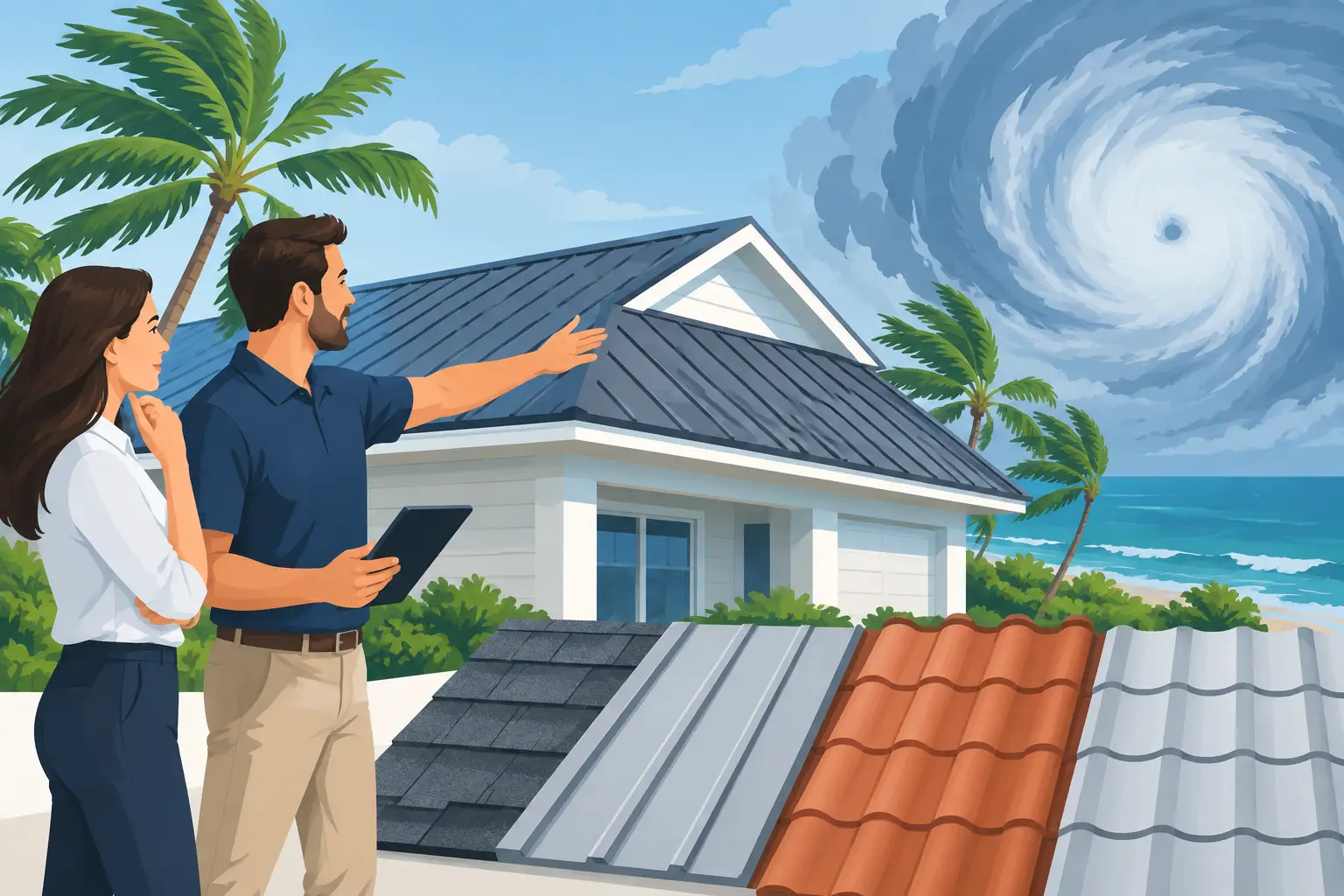
A South Florida roof has to do more than look good from the curb. It must stay attached when hurricane winds lift at edges and corners, shed wind-driven rain, resist heat and moisture, and protect the home when debris starts moving. Choosing the best roofing material for hurricanes starts with understanding that the roof covering is only one part of a complete protection system.
For many homeowners, standing seam metal offers the strongest combination of wind performance, water shedding, and service life. But metal is not automatically the right answer for every home. Concrete or clay tile, architectural shingles, roof shape, budget, local approval requirements, and installation quality all deserve careful consideration before work begins.
What makes a roof hurricane-resistant?
A hurricane-ready roof is an assembly, not a single product. The visible surface matters, but so do the roof deck, fasteners, underlayment, flashing, edge metal, ventilation details, and the way each component is tied together.
Wind does not push evenly across a roof. Pressure is often strongest around perimeter edges, ridges, and corners, where uplift can pull materials loose first. Once an opening develops, wind-driven rain can reach the deck and interior. That is why a roof that looks acceptable after a storm may still have hidden damage beneath the surface.
In South Florida, homeowners should look beyond broad claims such as “wind-resistant.” A qualified contractor should help verify that the selected roofing system, attachment method, and components are appropriate for the home’s location and current local code requirements. Properties in high-velocity hurricane zones can have especially demanding standards.
Best roofing material for hurricanes: the leading options
Standing seam metal roofing
Standing seam metal is often the leading choice for homeowners who want premium hurricane performance and long-term value. Its interlocking panels are secured with concealed clips or fasteners, minimizing exposed points where water can enter. The smooth surface also sheds heavy rain efficiently, and properly engineered systems can achieve high wind ratings.
Metal is lightweight compared with tile, which can reduce structural load. It also handles South Florida sun well, especially in lighter finishes that reflect heat. A quality metal roof can provide decades of service when it is properly designed and maintained.
The trade-off is upfront cost. Metal roofing is generally a larger investment than asphalt shingles, and details matter greatly. Panel layout, clip spacing, flashing, penetrations, and connections at valleys and roof edges all need experienced attention. A lower-priced installation that cuts corners can undermine the very protection metal is meant to provide.
Concrete and clay tile roofing
Concrete and clay tile remain popular throughout South Florida because they offer a substantial, refined appearance and strong durability. When the tile profile and attachment system are approved for the home’s wind exposure, tile can perform very well in hurricane conditions. It also resists rot and insect damage and can complement Mediterranean, coastal, and contemporary homes.
Tile does require a careful evaluation of the roof structure. It is significantly heavier than shingles or metal, and replacement projects may require confirmation that the home can support the selected system. Individual tiles can crack from impact or foot traffic, so ongoing inspections and prompt repairs are important.
A common misconception is that heavy tile cannot blow off. Weight helps, but attachment is what matters. The correct fasteners, adhesives, battens, underlayment, and edge details make the difference between an attractive tile roof and a dependable storm-defense system.
Architectural asphalt shingles
Architectural shingles are the most budget-conscious option for many homeowners, and high-quality products can provide dependable hurricane performance when selected and installed correctly. They are available in a wide range of colors and styles, easier to repair than some other roof types, and usually have a lower initial cost.
For hurricane exposure, standard three-tab shingles are typically not the strongest choice. Architectural shingles are thicker, more dimensional, and often designed for higher wind resistance. Homeowners should still ask about the complete system, including the specified wind rating, starter strips, nail placement, underlayment, and manufacturer-required accessories.
Shingles have a shorter expected service life than premium metal or tile systems in Florida’s heat, rain, and ultraviolet exposure. They can also be more vulnerable to uplift if installation details are inconsistent. That does not make shingles a poor choice. It means they are best for homeowners who want solid protection at a more accessible price point and are prepared for eventual replacement sooner than with metal or tile.
Specialty synthetic roofing
Synthetic slate and shake products can deliver a high-end look with less weight than natural slate or wood. Some products are engineered for strong wind and impact performance, making them worth considering for homeowners who want distinctive curb appeal without the maintenance concerns of natural materials.
The category varies widely by manufacturer and product line. Before choosing synthetic roofing, confirm local acceptance, wind classification, warranty terms, color stability, and the installer’s experience with that specific system. Premium materials still need premium installation.
The installation details that protect your home
Even the best roofing material can fail if the underlying system is weak. During a roof replacement, the contractor should inspect the deck for deteriorated wood, confirm the fastening approach, and address weak areas before the new roof covering goes on.
A secondary water barrier is particularly valuable in hurricane-prone areas. If wind damages the outer roofing layer, this protective layer can help slow water intrusion at the deck. It is not a substitute for an intact roof, but it can provide meaningful added protection during a storm.
Flashing deserves equal attention. Roof-to-wall connections, chimneys, skylights, valleys, vents, and penetrations are common leak points. So are roof edges, where uplift forces can be severe. A roof project should treat these areas as critical weatherproofing details, not minor add-ons.
Ventilation also has a role in roof longevity. A balanced ventilation plan can help manage attic heat and moisture, which supports comfort and may reduce stress on roofing materials. The correct approach depends on the home’s design, insulation, ceiling configuration, and existing ventilation conditions.
How to choose the right roof for your South Florida home
Start with the home itself. A low-slope roof may point toward certain metal systems, while a steep, visible roof may suit tile or architectural shingles. The structure, neighborhood style, budget, and long-term ownership plans should all influence the decision.
Then consider what level of investment makes sense. If you expect to remain in the home for decades, a premium metal or tile roof may justify its higher upfront cost through longevity, appearance, and reduced replacement cycles. If you need a reliable, code-conscious replacement with a lower initial investment, a high-quality architectural shingle system may be the better fit.
Do not choose based on material alone. Ask how the roof will be installed, which underlayment and flashing components are included, how existing deck issues will be handled, and whether the proposed system is suitable for your home’s wind zone. Clear answers are a sign of a contractor who understands hurricane protection beyond the surface.
Roofing is part of a larger hurricane-protection plan
A strong roof protects the top of the home, but hurricanes also test windows, doors, garage openings, and wall connections. When a window or door fails, sudden pressure changes and wind-driven rain can create serious damage inside the home. Coordinating roofing with impact-rated windows and doors can give homeowners a more complete exterior protection strategy.
Florida Roof & Impact helps South Florida homeowners assess these connected risks so roof replacement decisions support the home as a whole. The goal is not simply to install a new roof. It is to create confidence that the exterior is prepared for the weather this region faces.
The right next step is a professional roof evaluation that considers your roof’s condition, the home’s structure, local requirements, and the level of protection you want for the years ahead.